Decking In Canberra
Decking Experts
Reliable Property Maintenance for Canberra Homes
Decks fail from underneath. The boards get all the attention because they are what you see, but the joists, bearers, footings and drainage decide whether the deck is sound in fifteen years or spongy in six. Zenith Property Care builds new timber and composite decks, reboards and repairs existing ones, and sands, oils and restores decks that have gone grey. The substructure is where the specification is set: timber rated H4 where it goes in the ground and H3 above it, joists spaced to suit the board thickness, and the whole frame detailed so water leaves rather than sits. In the ACT, an unroofed deck generally avoids building approval where the floor level is no more than 1 m above ground and unsupported spans stay under 4 m, and those criteria are checked against your block before quoting. More than 7 years across Belconnen and Gungahlin, $5,000,000 QBE public liability cover, ABN 99 235 416 682. Call 0452 549 439.
GET A FREE QUOTE
Zenith Property Care
The Decking Work We Do
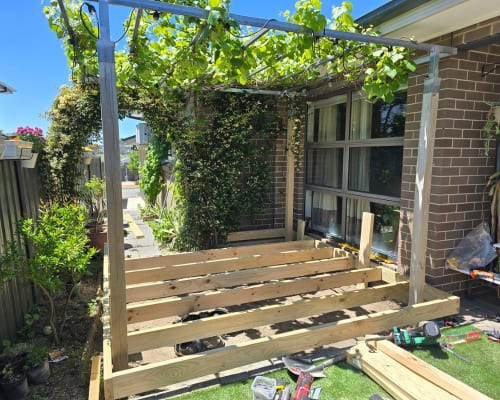
New timber decks are the core of it. Hardwood remains the default in Canberra for good reason, with merbau and spotted gum the common choices in 140 mm by 19 mm and 90 mm by 19 mm boards, both dense enough to hold up to summer heat and hard enough to resist the dents that softer timbers pick up. Treated pine is the value option and perfectly serviceable when it is coated and maintained. Composite decking is the second group and worth genuinely considering here rather than dismissing: it does not need oiling, it does not split or splinter, and in a climate that swings from a 28°C January average high to a 1°C July average low it does not check and cup the way exposed hardwood does, though it does run hotter underfoot in full summer sun and costs more upfront. Deck repairs and reboarding is a large share of the work and usually the right answer on a deck people assume is finished: where the substructure is sound, lifting the old boards and laying new ones onto the existing frame is a fraction of a rebuild. Individual rotted or cupped boards, failed fixings, springy sections where a joist has gone, loose or non-compliant balustrade and dropped stair treads are all repaired individually. Sanding, oiling and restoration is the fourth group, taking a deck that has weathered grey and silvered back to bare timber, then re-oiling it so it is protected rather than just clean. Cleaning alone is handled under pressure cleaning, and roofed structures over a deck under pergolas and carports.
Zenith Property Care
How We Build a Deck That Lasts
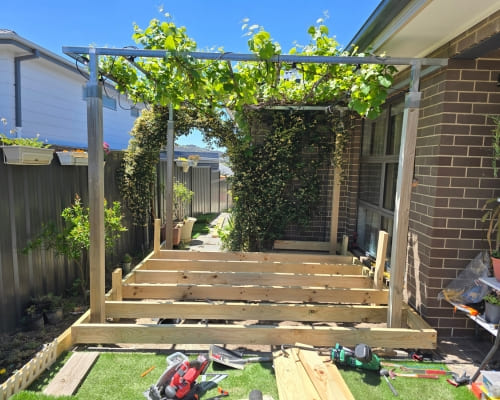
Substructure and drainage come first and account for most of the difference between a good deck and a cheap one, despite being entirely invisible once the boards go down. Footings are excavated to bear on suitable ground and poured, posts are set on galvanised anchors above the concrete rather than buried in it so the end grain can drain and dry, and every timber in ground contact is specified H4 rather than the H3 that is rated only for above-ground use. Bearers and joists are sized and spaced for the span and the board thickness, which for 19 mm hardwood decking means joists at 450 mm centres rather than the 600 mm that gets used to save material and then reads as bounce underfoot. The frame is set with a slight fall so water runs off, ground under the deck is kept clear and drainable rather than becoming a damp trap, and where the deck abuts the house the connection is flashed so water sheds away from the wall. Board selection and fixing is next: boards are laid with consistent 5 mm gaps for drainage and seasonal movement, fixed with proper decking screws rather than nails because nails work loose within a few seasons of Canberra timber movement, and pre-drilled at board ends so hardwood does not split. Where the deck floor sits more than 1 m above ground, balustrade is required and is built to the 1 m minimum height. The last stage is finishing and sealing, with all four faces and every cut end sealed before or during installation, because end grain is where moisture enters, then an oil or decking finish applied once the timber has settled. You are told when it needs recoating rather than left to work it out.
Zenith Property Care
Why Deck Substructure Matters Most
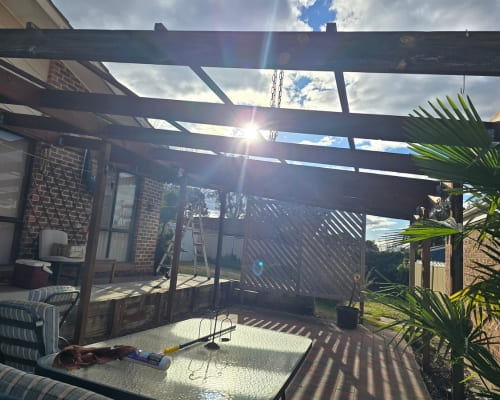
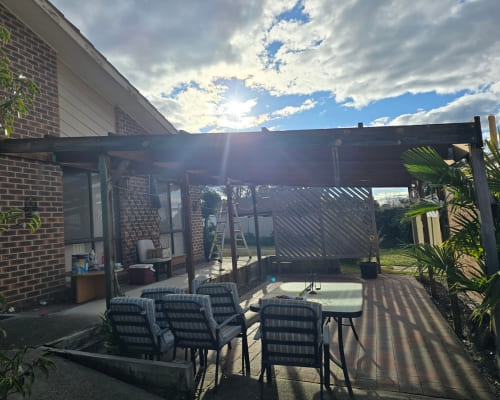
Almost every failed deck in Canberra is a substructure failure wearing a board-level disguise. The signs homeowners describe are a springy or bouncy section, boards that have started cupping, a step that has dropped, a balustrade that moves when you lean on it, or a deck that has pulled slightly away from the house, and none of those are board problems. They are joists that have gone soft where water sat, posts rotted at the soil line because they were buried in concrete, footings that were never deep enough, or fixings that have worked loose through years of movement. Canberra makes that worse than most cities. Canberra Airport averages a 28°C daily high in January against a 1°C daily low in July on roughly 624 mm of rain a year, and a deck that heats hard through summer afternoons and frosts overnight in winter is subjected to a movement cycle that steadily loosens every connection relying on friction. Low overall rainfall creates the opposite trap, since homeowners assume a dry climate is easy on timber, when in fact rapid drying is exactly what checks and cups exposed hardwood boards that were never sealed on all faces. The building stock plays in too: decks added to the 1968 to 1974 Belconnen brick veneer housing across Bruce, Holt and Kaleen are frequently owner-built additions from the 1990s where the framing was never rated for ground contact, while decks on the 2006 onwards Gungahlin estates around Harrison, Bonner and Casey are generally sound in frame but finished with builder-grade boards that have never been recoated. Zenith works both, off Ginninderra Drive and Gungahlin Drive, with more than 7 years locally and $5,000,000 QBE public liability cover under ABN 99 235 416 682.
Zenith Property Care
What Decking Costs in Canberra
Decks are quoted per project after a measure, and six things set the figure. The first is height off the ground, and it matters far more than most people expect: a low deck sitting close to ground level is a straightforward frame, while a deck that steps out over a falling Canberra block needs taller posts, deeper footings, bracing, stairs and balustrade, which is a different structure at a different cost. The second is area, though it is the least interesting variable because cost per square metre falls as area rises. The third is the board specification, with treated pine, merbau, spotted gum and composite representing four distinct budgets for identical framing underneath. The fourth is the substructure, since ground conditions, footing depth and whether the frame ties into an existing slab or house wall all vary by site. The fifth is balustrade and stairs, which are frequently the single largest line item on a raised deck and are the part omitted from cheap quotes, so check for it. The sixth is approvals, required once the structure exceeds the ACT exemption criteria. Zenith does not publish per square metre pricing for Canberra decks, because no sourced local pricing exists that would make a published figure honest, and a made-up range is worse than none. You get a measured, itemised, fixed-scope quote. Call 0452 549 439.
Zenith Property Care
Repair, Reboard or Rebuild
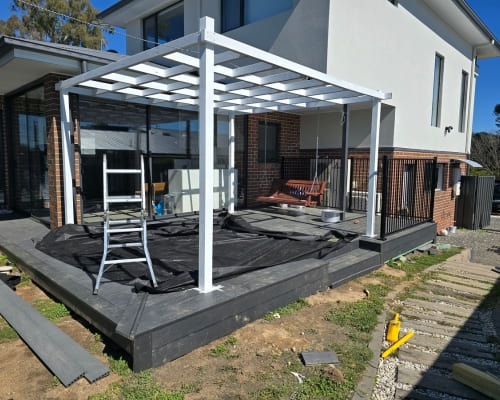
Three answers, and the substructure decides which one you have. Repair is right when the frame is sound and the problem is confined to boards, fixings, a stair tread or a section of balustrade. Individual boards can be replaced, fixings renewed, and a springy patch traced to one joist and corrected. This is the cheapest outcome and it is available far more often than homeowners assume, because a grey, splintered surface reads as terminal when the frame beneath it is perfectly serviceable. Reboarding is right when the boards have reached the end of their life across the whole deck, cupped, split, splintering, or fixed with nails that have all worked proud, but the joists, bearers, posts and footings are still sound. Lifting the old boards, inspecting and treating the frame and laying new boards onto it delivers a genuinely new deck for a fraction of a rebuild, and it is the single best value decision available in decking. Rebuilding is the honest answer once the substructure has failed: posts rotted at the soil line, joists soft where water has sat, footings inadequate or absent, or a frame built without ground-contact-rated timber. At that point money spent on boards is money spent on a deck with a countdown on it. The test is simple and it happens with a torch under the deck rather than from above. Zenith will tell you which of the three you have, including when the answer is the smallest job. Call 0452 549 439.
Related Decking Services in

The odd-jobs list that never gets shorter, handled in one visit. Repairs, installations, fittings and finishing work across Belconnen and Gungahlin, quoted in writing before anything starts, with the same tradesman from first look to final clean-up.
Repairs that hold, because the cause gets diagnosed before the symptom gets patched. Doors, locks, cabinetry, fixtures, walls and trims across Canberra, repaired and made good so the fix disappears into the house instead of announcing itself.
Repaints that hold, because the preparation is the job and the paint is the last twenty per cent. Interiors, exteriors, weatherboards and trim across Canberra, with timber damage repaired first rather than painted over and left to come back.
TESTIMONIALS
What Our Decking Customers Say About Us
The Process
3 Step Process For Your Decking Needs

Send Photos
Message or call with photos of the job. We ask the right questions upfront so the quote reflects the actual work involved.

Fixed Quote
You get a written price before anything starts, itemised by job, so there are no surprises when the invoice arrives.

Job Done
Sumith or one of his team completes the work, tidies the site, and walks you through the finished job before leaving.
Decking In
FREQUENTLY ASKED QUESTIONS
Everything you need to know about our Decking In
How much does a deck cost in Canberra?
Decks are quoted per project after a measure. The biggest driver is height off the ground rather than area, because a raised deck needs taller posts, deeper footings, bracing, stairs and balustrade, which is a different structure entirely to a low deck. Board specification, substructure and ground conditions, and whether approval is required all feed in. Zenith does not publish per square metre pricing because no sourced Canberra figures exist to make one honest. Call 0452 549 439 to book a measure.
Do I need approval to build a deck?
It turns on measurable criteria that are checked against your block before quoting. In the ACT, unroofed decks, patios and terraces generally do not need building approval where the highest point of the structure is no more than 3 m off the ground, the floor level is no more than 1 m above ground, and the frame has no unsupported span greater than 4 m. Exceed any of those and approval is generally required. Even an exempt deck must still meet structural and safety standards, including balustrade where the floor is over 1 m up.
Timber or composite decking?
Both work well in Canberra and the trade-off is upfront cost against maintenance. Hardwood such as merbau or spotted gum looks better, costs less to install and can be resanded and recoated indefinitely, but it needs oiling on a cycle and it will check and cup if it was never sealed on all four faces. Composite costs more upfront, never needs oiling, and does not split or splinter, which suits households with young children, though it runs hotter underfoot in full summer sun.
Can you repair rather than replace my deck?
Very often, yes, and it is worth insisting the substructure is inspected before accepting a rebuild quote. A deck that looks finished from above, grey, splintered and tired, frequently has a perfectly sound frame underneath, in which case reboarding onto the existing joists gives you a new deck for a fraction of a rebuild. Individual rotted boards, failed fixings, a springy section from one bad joist and loose balustrade are all repairable. The assessment happens with a torch under the deck.
How often should a deck be re-oiled?
In Canberra, most exposed hardwood decks want recoating every twelve to eighteen months, and a deck under a pergola or in shade can stretch further. The climate is harsher on decking finishes than people expect, because high-altitude ultraviolet through summer breaks the coating down while the swing to a 1°C average July low keeps the timber moving. The honest test is whether water still beads on the surface: once it soaks straight in, the coating has gone and the timber is exposed.
How long does a deck take to build?
A straightforward low deck on a clear site is typically one to two weeks, split around footing cure time since concrete has to set before the frame goes on. A raised deck with stairs and balustrade generally runs two to three weeks. Reboarding an existing sound frame is much faster, often three to five days. Where approval is needed, that lead time sits ahead of the build and is shown separately in your programme rather than folded into the construction estimate.
Request A Free Decking Quote
GET A FREE QUOTE
BUSINESS
SERVICES
SERVICE AREAS
OPERATING HOURS
Sun: 7:00am - 9:00pm
Mon: 7:00am - 9:00pm
Tue: 7:00am - 9:00pm
Wed: 7:00am - 9:00pm
Thu: 7:00am - 9:00pm
Fri: 7:00am - 9:00pm
Sat: 7:00am - 9:00pm