Timber Flooring In Canberra
Timber Flooring Experts
Reliable Property Maintenance for Canberra Homes
Timber floors fail in Canberra for one reason above all others, and it is not wear. It is moisture and movement. An inland climate that swings from a 28°C average January high to a 1°C average July low, with low humidity and roughly 624 mm of rain a year, moves timber hard, and a floor laid without testing the subfloor, acclimatising the boards and leaving proper expansion allowance will cup, gap or peak regardless of how good the timber was. Zenith Property Care lays solid timber, engineered and laminate floors, repairs and replaces damaged boards, and sands, stains and refinishes existing floors. This is a carpenter's approach to flooring rather than a retail one: the subfloor is checked and moisture-tested before anything is ordered. More than 7 years across Belconnen and Gungahlin, $5,000,000 QBE public liability cover, ABN 99 235 416 682. Call 0452 549 439.
GET A FREE QUOTE
Zenith Property Care
The Flooring Work We Do
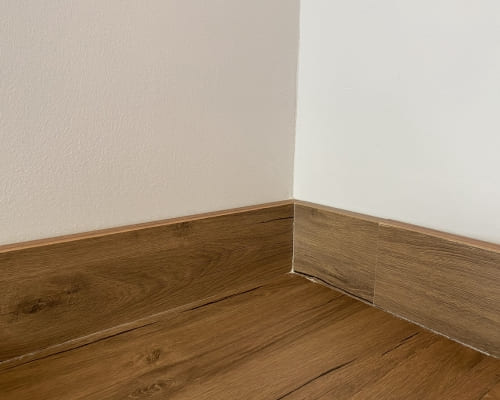
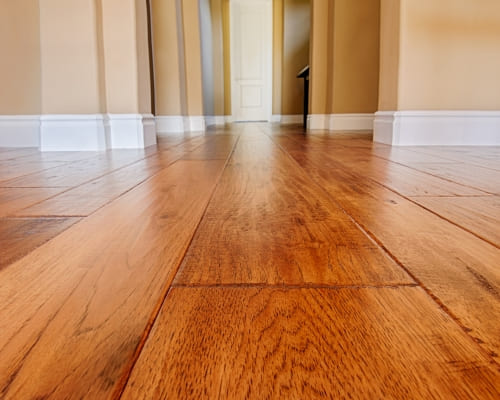
Solid timber flooring is the premium option and the one that lasts longest, typically 19 mm tongue-and-groove boards in Australian hardwoods such as blackbutt, spotted gum, brushbox and Tasmanian oak, either secret-nailed over joists and battens or direct-fixed to a substrate. Its real advantage is that it can be resanded and refinished several times across its life, so a solid floor is effectively renewable in a way nothing else is. Engineered and laminate boards are the second group and often the correct answer rather than the compromise: engineered boards carry a genuine timber wear layer over a stable plywood core, which makes them considerably more dimensionally stable than solid timber in a climate that swings as hard as Canberra's, and they suit slab-on-ground homes and areas with underfloor heating. Laminate is a printed surface rather than timber and is priced accordingly, but it is hard-wearing and sensible in high-traffic or rental situations. Board repairs and replacement is the third group: individual boards damaged by a leak, a dropped appliance or a pet, sections cupped or peaked where moisture has been present, gaps opened along a run, squeaking and movement traced to loose fixings or a joist issue below, and threshold and trim work where a floor meets tile or carpet. Sanding, staining and finishing is the fourth and best-value option in older homes, since many 1968 to 1974 Belconnen houses have original hardwood boards hidden under carpet that come up beautifully. Subfloor timber problems are handled under carpentry services.
Zenith Property Care
How We Lay a Floor That Lasts
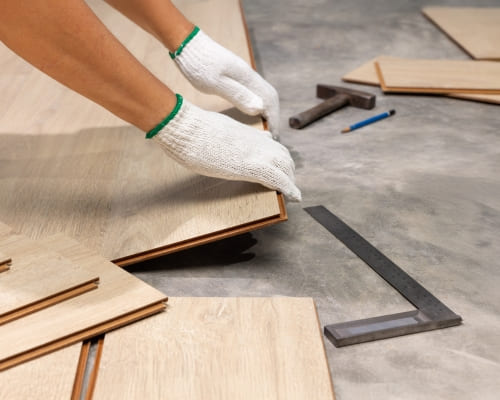
The subfloor check and moisture test happens before anything is ordered, and skipping it is the single biggest cause of flooring failure. The substrate is checked for level, because a floor laid over an out-of-tolerance subfloor will telegraph every dip and eventually gap at the joints, and it is moisture-tested, since laying timber over a slab or a subfloor carrying excess moisture guarantees cupping no matter how the boards were stored. Ventilation under a suspended timber floor is checked too, as blocked subfloor vents are common in older Canberra homes after landscaping has been built up against the house, and that trapped moisture will come up through the floor. Any loose, squeaking or deteriorated boarding below is corrected first. Acclimatising, setting out and laying is the second stage. Boards are delivered and left in the room in which they will be laid, in the conditions they will live in, so their moisture content equalises with the house before they are fixed, and rushing this in an inland climate is exactly how a floor ends up gapping in its first winter. Set-out then decides the direction of the boards, usually along the longest sightline or perpendicular to the joists, and where the cuts fall, and a consistent expansion gap of around 10 mm is left at every wall and fixed obstruction, concealed by skirting or scotia rather than filled. Sanding, sealing and finishing is the last stage, working through progressively finer abrasives to a flat surface with no drum marks, then applying the finish in multiple coats, typically three, in either a water-based low-VOC polyurethane that dries fast and stays clear or a solvent-based polyurethane that is more durable but ambers over time and needs the house vacated longer. You are told which is which rather than given one option.
Zenith Property Care
A Carpenter's Eye on Your Floor
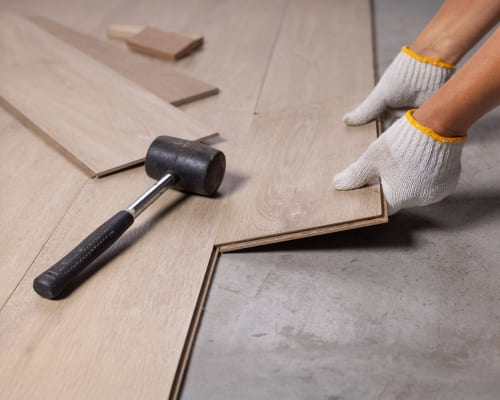
Most flooring in Canberra is sold by retailers and installed by whoever is available, which is why so many floors are technically installed correctly and still fail. A carpenter looks at the structure first. Is the subfloor sound and adequately ventilated? Are the joists at spacings that suit the product? Has the ground level outside been built up against the house so the subfloor cannot breathe? Is the slab actually dry, or just dry on the surface? Those questions are structural, and they decide the outcome far more than the brand of board. The local climate makes them non-negotiable. Canberra Airport averages a 28°C daily high in January against a 1°C daily low in July on roughly 624 mm of rain a year, and low inland humidity through summer draws moisture out of timber fast while a damp winter puts it back. That is a bigger annual moisture cycle than coastal cities impose, and the consequence is that expansion allowance and acclimatisation are not optional refinements here, they are the job. The building stock splits neatly: the 1968 to 1974 Belconnen housing through Bruce, Holt, Macgregor and Kaleen is largely suspended timber floors, often with original hardwood boards worth resanding, and the questions there are ventilation and board condition. The 2006 onwards Gungahlin estates around Harrison, Franklin, Bonner and Casey are largely slab-on-ground, where slab moisture and the choice between engineered and solid is the decision. Zenith works both, off Ginninderra Drive and Gungahlin Drive, with more than 7 years locally, ABN 99 235 416 682 and $5,000,000 QBE public liability cover.
Zenith Property Care
What Timber Flooring Costs in Canberra
Flooring is quoted per project after a measure, and the product is only one part of it. The first driver is which product you choose, and the spread between laminate, engineered and solid hardwood is wide enough that it dominates the quote, which is why you should be shown all three costed for your actual area rather than steered to one. The second is the subfloor and what it needs: a level, dry, sound substrate is straightforward, while one needing levelling, moisture remediation, ventilation work or board replacement carries real preparation cost, and that is precisely why the inspection happens before the price. The third is the installation method, since secret-nailing solid timber over battens, direct-fixing, and a floating floor over underlay are three different labour costs. The fourth is area and layout complexity, because a large open rectangle is far more efficient per square metre than several small rooms with doorways, thresholds and stair nosings. The fifth is whether existing floor coverings need lifting and disposing of. The sixth is the finish and coat count. Removals, preparation and finishing are itemised separately from the boards so you can see what you are paying for each, and materials are quoted at cost. Zenith does not publish per square metre figures for Canberra flooring because no sourced local pricing exists to support one. Call 0452 549 439 to book a measure.
Zenith Property Care
Repair, Resand or Replace
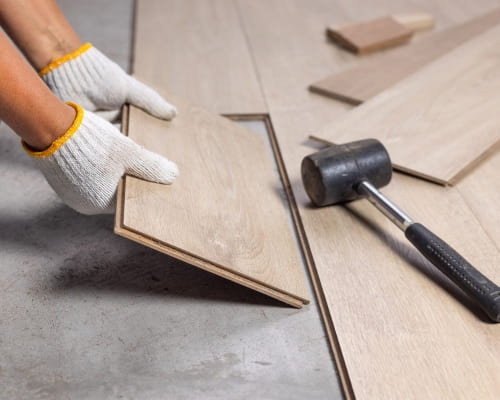
The wear layer decides it. Repair is right when the damage is confined to a handful of boards and the rest of the floor is sound: a water stain from a leak, a cracked board, a section cupped where moisture sat, a squeak or a soft spot traced to fixings or a joist below. Individual boards can be lifted and replaced, and on a floor that is later going to be sanded the repair effectively disappears. Resanding is right when the floor is structurally sound but the surface is finished, meaning scratched, dull, worn through in traffic lanes or coated in a finish that has gone patchy. This is the most underrated option in Canberra housing, because a solid hardwood floor has enough thickness above the tongue to be sanded several times across its life, and an original floor from a 1970s Belconnen home that has been under carpet for decades will usually come up better than anything you could buy to replace it. Engineered boards can also be resanded, but only once or twice depending on wear-layer thickness, and laminate cannot be sanded at all. Replacement is the honest answer when the wear layer is gone, when boards have been sanded to the point that the tongue is exposed, when moisture damage is widespread rather than localised, or when the subfloor itself has failed and has to be rebuilt. Zenith will tell you which of the three you have after looking at the floor, not before. Call 0452 549 439.
Related Timber Flooring Services in

The odd-jobs list that never gets shorter, handled in one visit. Repairs, installations, fittings and finishing work across Belconnen and Gungahlin, quoted in writing before anything starts, with the same tradesman from first look to final clean-up.
Repairs that hold, because the cause gets diagnosed before the symptom gets patched. Doors, locks, cabinetry, fixtures, walls and trims across Canberra, repaired and made good so the fix disappears into the house instead of announcing itself.
Repaints that hold, because the preparation is the job and the paint is the last twenty per cent. Interiors, exteriors, weatherboards and trim across Canberra, with timber damage repaired first rather than painted over and left to come back.
TESTIMONIALS
What Our Timber Flooring Customers Say About Us
The Process
3 Step Process For Your Timber Flooring Needs

Send Photos
Message or call with photos of the job. We ask the right questions upfront so the quote reflects the actual work involved.

Fixed Quote
You get a written price before anything starts, itemised by job, so there are no surprises when the invoice arrives.

Job Done
Sumith or one of his team completes the work, tidies the site, and walks you through the finished job before leaving.
Timber Flooring In
FREQUENTLY ASKED QUESTIONS
Everything you need to know about our Timber Flooring In
How much does timber flooring cost in Canberra?
It is quoted per project after a measure, and the product choice dominates, with laminate, engineered and solid hardwood spanning a wide range for the same area. Beyond the boards, the drivers are what the subfloor needs, the installation method, the layout complexity, whether existing coverings have to be lifted and disposed of, and the finish. Preparation and finishing are itemised separately from materials, which are quoted at cost. Zenith does not publish per square metre figures because no sourced Canberra pricing exists.
Can you repair damaged boards rather than replace the floor?
Yes, and it is usually the right first question. Individual boards damaged by a leak, a dropped appliance or a pet can be lifted and replaced, and if the floor is later sanded and refinished the repair effectively disappears. Cupped or peaked sections are assessed for what caused the moisture, because replacing boards without fixing the source guarantees a repeat. Squeaks and soft spots are traced to fixings or the structure below rather than covered over.
How long does a timber floor take to lay?
Allow one to two weeks for a typical home, and note that a meaningful part of that is not installation. Boards need to acclimatise in the room before they are fixed, which in Canberra's inland climate is genuinely important rather than a formality, and finishing requires multiple coats with drying time between each. A floating engineered or laminate floor is faster because it needs no site finishing. Your programme sets out the stages and when the rooms are usable.
Can you sand and re-finish an existing floor?
Yes, and in older Belconnen homes it is often the best money you can spend on a house. Original hardwood boards that have spent decades under carpet usually come up better than anything comparable you could buy new. The floor is sanded through progressively finer abrasives to a flat surface, then finished in three coats of either a water-based low-VOC polyurethane or a solvent-based polyurethane, and the trade-offs between the two on drying time, durability and ambering are explained before you choose.
Solid timber, engineered or laminate - which should I choose?
It depends mostly on your subfloor and how long you want the floor to last. Solid hardwood is the longest-lived because it can be resanded several times, and it suits suspended timber floors, which covers most older Belconnen housing. Engineered board is more dimensionally stable in Canberra's moisture swing and is generally the better choice over a slab, which covers most Gungahlin homes built from 2006 onwards. Laminate is the value option, hard-wearing but not sandable. You will be shown all three costed for your area.
How long before I can walk on it?
With a site-finished floor, allow around 24 hours after the final coat before light foot traffic in socks, and up to a week before rugs go down and furniture is moved back, since the finish continues curing after it feels dry. Walking on it early or dragging furniture across it is the most common way a brand new floor picks up its first permanent marks. A floating engineered or laminate floor can generally be walked on immediately because there is no site-applied finish to cure.
Request A Free Timber Flooring Quote
GET A FREE QUOTE
BUSINESS
SERVICES
SERVICE AREAS
OPERATING HOURS
Sun: 7:00am - 9:00pm
Mon: 7:00am - 9:00pm
Tue: 7:00am - 9:00pm
Wed: 7:00am - 9:00pm
Thu: 7:00am - 9:00pm
Fri: 7:00am - 9:00pm
Sat: 7:00am - 9:00pm