Fence & Gate Repairs In Canberra
Fence & Gate Repairs Experts
Reliable Property Maintenance for Canberra Homes
Most Canberra fence complaints are a post problem wearing a paling disguise. A run that leans, a panel that has come loose, a gate that drags on the path: replace the visible timber and the same fault returns within a season, because the post it is fixed to has rotted at ground level or worked loose in the hole. Zenith Property Care checks the posts first, then repairs or replaces only what has actually failed. Work covers leaning and loose panels, broken and rotten palings, dropped and dragging gates, and latches, hinges and hardware. Under the ACT's Common Boundaries Act 1981 a shared boundary fence is normally a 50/50 cost between neighbours, and Zenith quotes in a format you can hand straight to the person next door. More than 7 years across Belconnen and Gungahlin, $5,000,000 QBE public liability cover, ABN 99 235 416 682. Photographs to 0452 549 439 get a written price.
GET A FREE QUOTE
Zenith Property Care
The Fence and Gate Work We Do
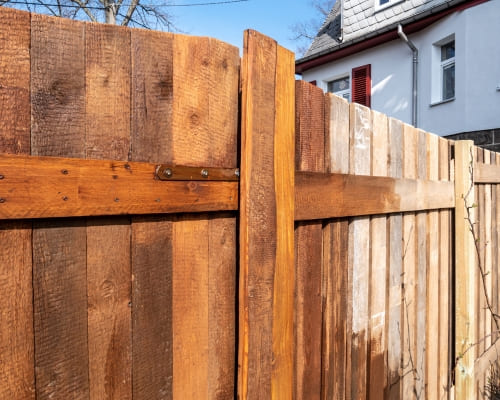
Leaning and loose panels are the most common call and almost always a post issue. A run that has developed a lean, panels that move when you push them, rails that have pulled away from the post, or a whole section pushed over by a storm or a growing tree root: the palings are reporting the fault, not causing it. Broken or rotten palings are the second group, covering individual palings snapped or kicked out, whole sections weathered grey and gone soft, palings rotted at the base where soil or garden bed material has built up against them, and the ends of hardwood palings splitting at the fixings. Dropped and dragging gates are the third and the most irritating to live with, whether that is a gate scraping the path, a gate that no longer meets its latch, one that swings open on its own because the post has tilted, or a heavy gate that has racked out of square under its own weight. Latches, hinges and hardware is the fourth group: seized or rusted hinges replaced with galvanised or powder-coated equivalents rated for the gate weight, latches repositioned to actually catch, self-closing hardware, drop bolts, and pool gate hardware where compliance under AS 1926 applies. Timber, Colorbond and mixed runs are all repaired. Where the failure is a retaining or structural element behind the fence rather than the fence itself, that is quoted as carpentry work instead.
Zenith Property Care
How We Make a Fence Sound Again
Check the posts first. This is not a slogan, it is the entire diagnosis, and it is the step most quotes skip because posts are the expensive part. A post is tested by pushing at the top and watching where the movement originates: movement at ground level means the post has rotted at the soil line, which is where untreated or under-treated timber always fails, while movement of the whole post including its footing means the concrete has broken up or was never adequate. Timber below ground needs to be H4 treated for in-ground contact, and a great many Canberra fences were built with H3 posts rated only for above-ground use, which is precisely why they are failing at fifteen years instead of thirty. Only once the posts are assessed does the work move to repairing or replacing the failed section: rotted posts dug out and reset in concrete to a proper depth, which for a standard 1.8 m paling fence means a hole taking roughly 600 mm of the post below ground rather than the 300 mm a hurried job gets away with, 75 mm by 50 mm rails replaced where they have split at the fixings, palings replaced individually or by section, and everything refixed with galvanised fasteners rather than the bright steel that streaks rust down a fence inside two years. The last step is realigning and testing the gate, because a gate is the moving part and it is the honest test of whether the run is now square. Hinges are packed or repositioned, the gate is set to a consistent clearance along the leading edge and above the path, the latch is aligned to catch on a normal swing, and it is opened and closed repeatedly before we leave rather than once.
Zenith Property Care
Why a Fence Fails and What It Tells You
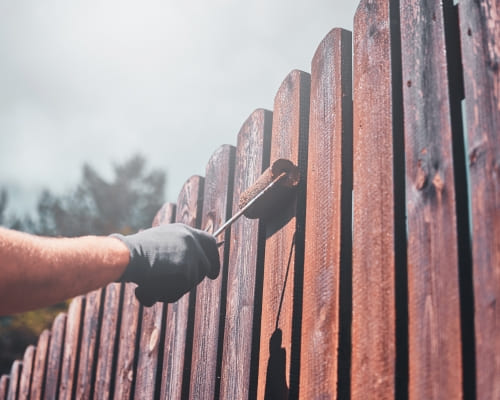
Canberra fences fail for reasons you can read off the fence itself. The dominant one is the climate cycle: Canberra Airport averages a 28°C daily high in January against a 1°C daily low in July on roughly 624 mm of rain a year, and that combination of hard summer drying, winter frost and low overall rainfall shrinks and checks exposed hardwood palings, opens the gaps, splits the ends around fixings and works rails loose over a decade. The second reason is ground moisture at the post line, and the giveaway is a fence that is perfectly sound along most of its length and rotten in one specific stretch, which almost always corresponds to a garden bed built up against it, a downpipe discharging nearby or a low point where water sits after a storm. Fix the drainage and the repair lasts; ignore it and the new post rots in the same spot. The third is age and specification. The 1968 to 1974 Belconnen suburbs including Bruce, Holt, Macgregor and Kaleen have had multiple fence generations, and what fails now is usually a 1990s replacement built with posts rated for the wrong exposure. The newer Gungahlin suburbs such as Harrison, Franklin, Bonner and Casey are on their original developer-installed fencing, which typically starts showing gate and hardware failure well before the palings go. Zenith reads all of that from the site rather than guessing, working off Ginninderra Drive and Horse Park Drive under $5,000,000 QBE public liability cover.
Zenith Property Care
What Fence and Gate Repairs Cost in Canberra
Fence repairs are quoted by what has to be replaced, and the single biggest fork in the road is posts. A repair that reuses sound existing posts and replaces rails and palings is a fundamentally different cost to one that requires posts dug out, old concrete broken up and new posts set, because the post is the labour-intensive part and the concrete needs time to cure before the run can be reloaded. Beyond that, the drivers are the number of metres or panels affected, whether the run is timber, Colorbond or mixed, access, since a rear boundary you can only reach by carrying materials through the house is materially slower than a fence you can back a ute up to, and how much of the failure is hidden, which is why photographs showing the base of the posts matter more than photographs of the palings. Gate work is quoted separately from fence work because a gate can often be corrected on its own for a small figure. Disposal of the old material is itemised rather than assumed. Where the fence is a shared boundary, the quote is written so the scope and figure can be shown to your neighbour and split under the Common Boundaries Act 1981. Send photographs including the post bases to 0452 549 439.
Zenith Property Care
Repair a Section or Replace the Run
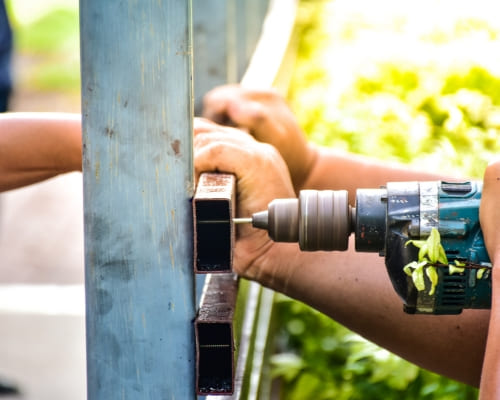
The test is what proportion of the posts are still sound, not how bad the palings look. Repairing a section is the right answer when the posts along the run are largely solid and the failure is confined: two or three palings gone, a rail split, one post rotted, a storm-damaged panel. That is a contained job, it is by far the cheapest outcome, and a fence that has been sensibly patched over the years is not a failure of maintenance. It is also the sensible answer where a shared boundary neighbour is not in a position to contribute to a full replacement, since a repair keeps the fence functional without a negotiation. Replacing the run becomes the honest answer once more than roughly a third of the posts are failing, because at that point you are paying repeated attendance costs to chase a fault down the line and the cumulative spend overtakes a single replacement inside a few years. It is also the right call when the existing fence was built to a specification that cannot be fixed, such as posts rated for above-ground use sitting in the ground. Zenith will tell you which side of that line you are on and will not quote a replacement for a fence that needs three palings. Worth knowing before you decide: under the ACT's Common Boundaries Act 1981 the default position for a shared side or rear boundary is that costs are split equally, the reference standard is a basic urban fence of hardwood palings around 1.5 m high, you serve your neighbour a notice to discuss the work, and if you cannot agree within a month either party can apply to ACAT. Ask for a quote written to be shared.
Related Fence & Gate Repairs Services in

The odd-jobs list that never gets shorter, handled in one visit. Repairs, installations, fittings and finishing work across Belconnen and Gungahlin, quoted in writing before anything starts, with the same tradesman from first look to final clean-up.
Repairs that hold, because the cause gets diagnosed before the symptom gets patched. Doors, locks, cabinetry, fixtures, walls and trims across Canberra, repaired and made good so the fix disappears into the house instead of announcing itself.
Repaints that hold, because the preparation is the job and the paint is the last twenty per cent. Interiors, exteriors, weatherboards and trim across Canberra, with timber damage repaired first rather than painted over and left to come back.
TESTIMONIALS
What Our Fence & Gate Repairs Customers Say About Us
The Process
3 Step Process For Your Fence & Gate Repairs Needs

Send Photos
Message or call with photos of the job. We ask the right questions upfront so the quote reflects the actual work involved.

Fixed Quote
You get a written price before anything starts, itemised by job, so there are no surprises when the invoice arrives.

Job Done
Sumith or one of his team completes the work, tidies the site, and walks you through the finished job before leaving.
Fence & Gate Repairs In
FREQUENTLY ASKED QUESTIONS
Everything you need to know about our Fence & Gate Repairs In
How much does a fence repair cost?
It is quoted by what actually has to be replaced, and posts are the fork in the road. Reusing sound posts and replacing rails and palings is far cheaper than digging out rotted posts, breaking up old concrete and resetting new ones. The other drivers are the number of panels affected, timber versus Colorbond, access to the boundary, and disposal of the old material. Send photographs that include the base of the posts, not just the palings, to 0452 549 439 and you will get a written itemised figure.
My gate drags on the ground - can it be fixed?
Nearly always, and usually for less than people expect. A dragging gate is generally a hinge post that has tilted or a gate that has racked out of square under its own weight, rather than a gate that needs replacing. The fix is stabilising or resetting the post, squaring the gate with a brace or a tension cable, repacking or repositioning the hinges, and realigning the latch so it catches on a normal swing. Where the hinges are undersized for the gate weight they are replaced with galvanised hardware properly rated for it.
Do you replace whole fences or only repair?
Both, but repair is recommended wherever it is genuinely the better value, which is more often than the trade tends to admit. The working rule is the proportion of posts still sound: with most posts solid, a sectional repair is the sensible spend, while more than roughly a third failing means you will be chasing the fault down the line and a full replacement costs less over a few years. You will be told which one you have, including when that means the smaller job.
Who pays for a shared boundary fence?
In the ACT, dividing fences are covered by the Common Boundaries Act 1981, and the default is that adjoining owners share the cost of a basic urban fence equally, fifty-fifty. The reference standard in the Act is hardwood paling construction around 1.5 m high, and anything beyond that needs to be agreed between you. The process is to serve your neighbour a notice to discuss the fencing work; if there is no agreement within a month, either party can apply to ACAT. Zenith writes fence quotes so the scope and figure can be handed straight to your neighbour.
Can you match my existing fence?
Usually yes for timber paling fences, which is the majority of Canberra boundaries, though a repair section will read slightly newer until it weathers back over a season or two. Where palings have been discontinued in a particular width, the closest available is used and the join is placed at a natural break in the run rather than mid-panel. Colorbond is matched on colour where the original is still in the current range, and where it is not you will be shown the nearest options before anything is ordered.
How long does a fence repair take?
A sectional repair reusing existing posts is typically a half to a full day. Where posts need to be dug out and reset, the concrete needs time to cure before the run can carry load, so the work is normally split across two visits and the fence is left safe and secure in between. Gate realignment on its own is usually inside an hour or two. Your quote states the expected attendance and whether a return visit is part of it.
Request A Free Fence & Gate Repairs Quote
GET A FREE QUOTE
BUSINESS
SERVICES
SERVICE AREAS
OPERATING HOURS
Sun: 7:00am - 9:00pm
Mon: 7:00am - 9:00pm
Tue: 7:00am - 9:00pm
Wed: 7:00am - 9:00pm
Thu: 7:00am - 9:00pm
Fri: 7:00am - 9:00pm
Sat: 7:00am - 9:00pm